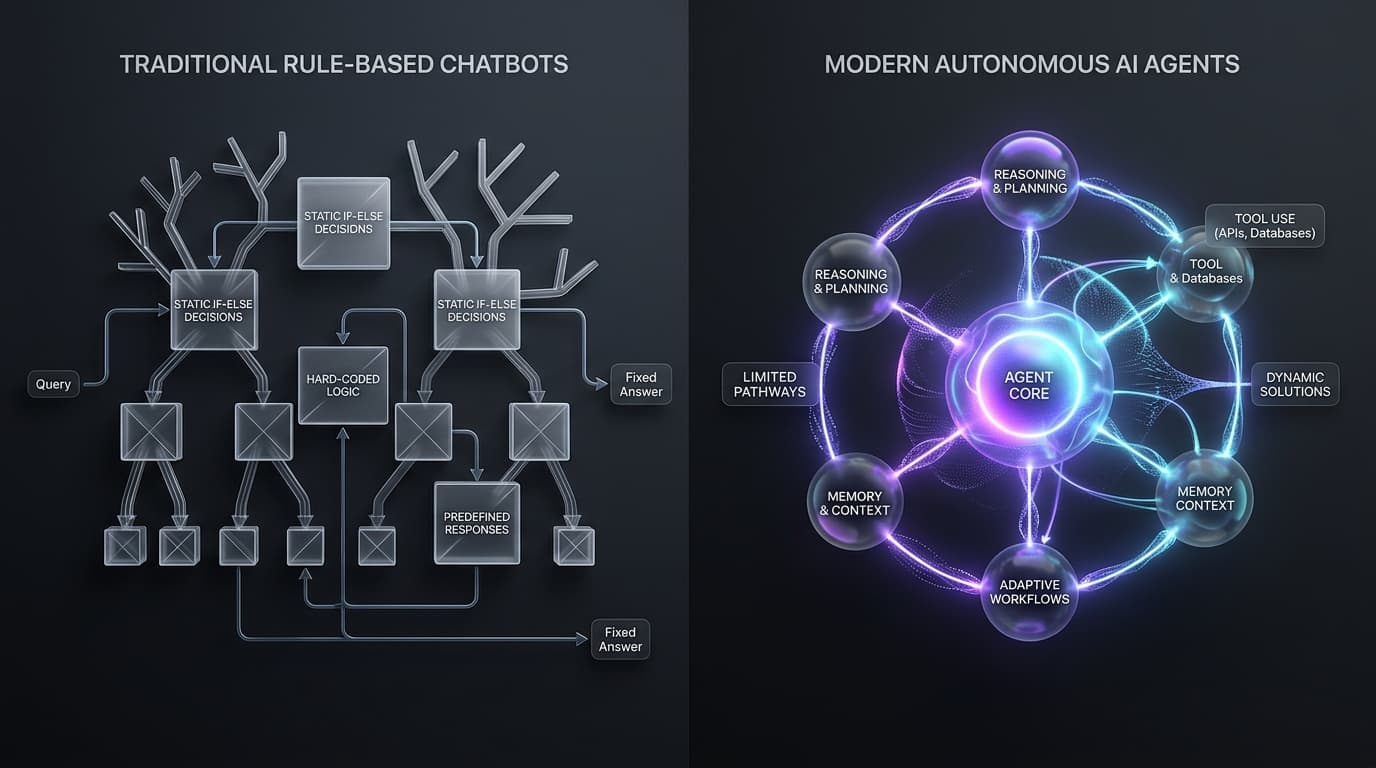
For years, the tech industry assumed that frontier AI capabilities required billions of dollars in training compute, proprietary black-box APIs, and total reliance on a handful of Silicon Valley cloud providers. In 2026, DeepSeek R1 shattered that assumption forever.
By matching the mathematical and multi-step reasoning capabilities of OpenAI's o1 while releasing open model weights, DeepSeek triggered an earthquake in enterprise technology budgets. Corporate engineering leaders, CTOs, and founders are now actively reassessing their infrastructure: why pay $15 per million tokens to a closed vendor when you can run open reasoning models with zero vendor lock-in and complete data sovereignty?
The DeepSeek R1 Disruption: Smashing the Frontier AI Monopoly
Before DeepSeek R1, "reasoning models" that utilize test-time compute (extended internal chain-of-thought generation before outputting) were locked behind closed proprietary APIs.
DeepSeek proved that reinforcement learning applied directly to base models with cold-start data generation could unlock world-class reasoning without expensive human labeling. For business decision makers, this delivers three historic advantages:
- Open Weights Freedom: You inspect the full model architecture, fine-tune internal checkpoints, and audit token probabilities.
- 10x Cost Reduction: API pricing for DeepSeek-grade reasoning is under $0.55 per million input tokens, democratizing advanced reasoning for high-volume batch workflows.
- Local & Sovereign Deployment: Regulated industries (FinTech, Healthcare, Defense) can operate reasoning systems completely behind their own air-gapped firewalls.
Key Architectural Innovations: MoE & Multi-Head Latent Attention
How does DeepSeek R1 achieve flagship-level intelligence without requiring thousands of megawatt-class data centers?
Dense Transformer Architecture
- Activates 100% of network parameters on every single token.
- High memory bandwidth saturation and explosive GPU power draw.
- Exponential cost scaling as context length increases.
DeepSeek MoE + MLA Architecture
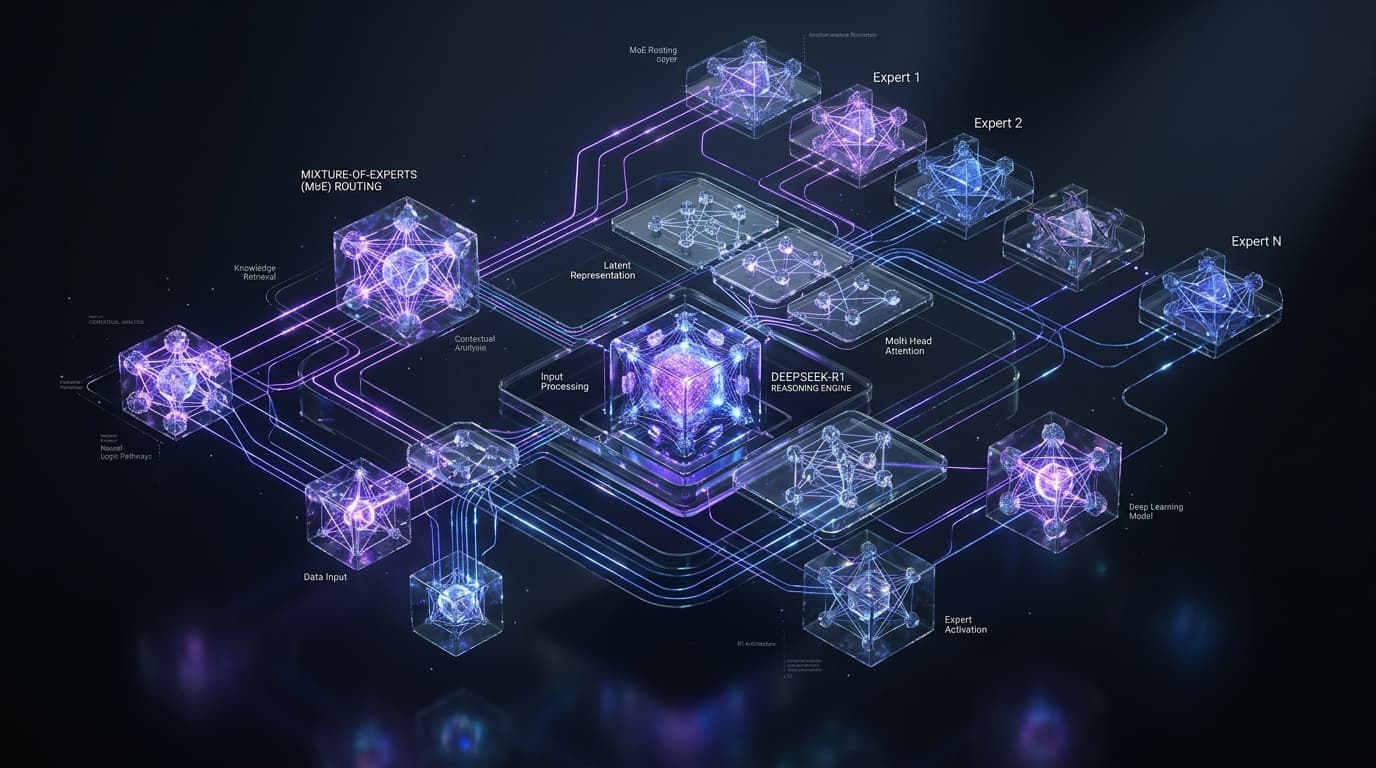
- Mixture-of-Experts (MoE): 671B total parameters, but only 37B active parameters per token.
- Multi-Head Latent Attention (MLA): Compresses Key-Value (KV) cache by over 80%, slashing GPU VRAM requirements.
- Multi-Token Prediction (MTP): Predicts multiple forward tokens concurrently for faster inference throughput.
Cost Economics: API Calling vs Private Self-Hosting
When architecting an enterprise application processing 50 million monthly tokens across customer support, code synthesis, and analytical reporting, compare the two economic models:
| Operating Factor |
Proprietary Closed APIs |
DeepSeek R1 / Distilled Self-Hosting |
| Token Cost per 1M (Reasoning) |
$15.00 – $60.00 |
$0.55 – $2.19 (Cloud API) / $0 marginal compute on-prem |
| Monthly Cost (50M tokens) |
~$1,500 – $3,000 / month |
~$110 / month (API) or fixed reserved GPU instance |
| Data Privacy & GDPR |
Data transits external third-party servers |
100% private VPC; zero data leaks to public training sets |
| Custom Fine-Tuning |
Restricted or prohibitively expensive |
Full LoRA and full-parameter fine-tuning on proprietary data |
Data Sovereignty & Compliance: Why On-Premises Matters
For banks, healthcare providers, and legal firms, uploading proprietary intellectual property or patient records to third-party endpoints is a compliance nightmare.
With open-weights reasoning models, compliance teams can verify that:
- Customer PII never traverses the public internet.
- Model weights are frozen and deterministic, preventing unexpected capability shifts.
- Inference logs are retained solely within company-controlled S3 or Azure Blob stores with full cryptographic audit trails.
Deploying Reasoning Models in Autonomous Agent Pipelines
The most powerful application of DeepSeek R1 is not simple chat—it is serving as the orchestrator brain in multi-agent workflows.
Because R1 excels at generating internal verification traces, it acts as the master planner that:
- Analyzes an ambiguous business objective.
- Drafts an exhaustive step-by-step execution roadmap.
- Delegates sub-tasks to smaller, ultra-fast worker models (e.g. Claude 3.5 Haiku, Llama 3 8B, or GPT-4o Mini).
- Critiques worker outputs and rectifies discrepancies before final delivery.
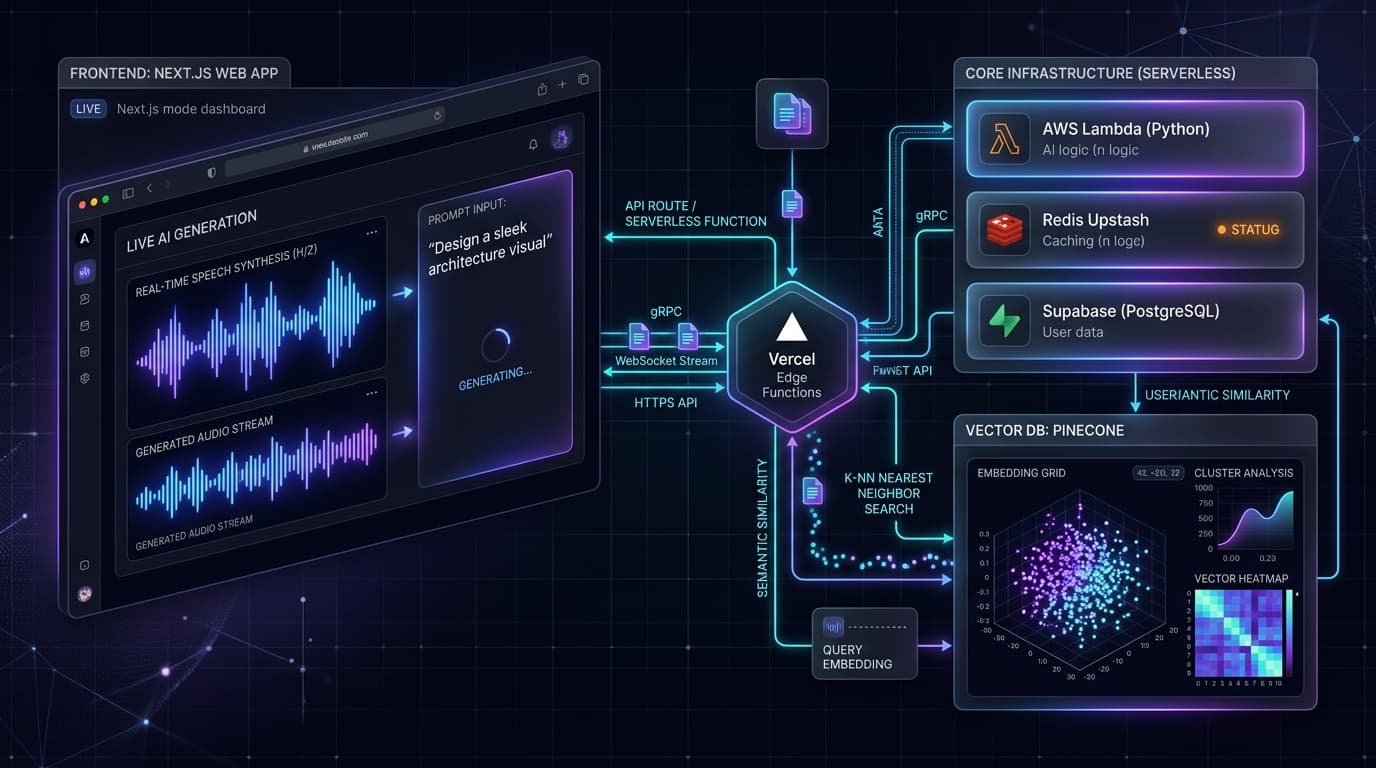
Tech Solo's Enterprise Self-Hosting Blueprint
At Tech Solo, we assist organizations in architecting resilient, production-ready AI infrastructure:
- vLLM & TensorRT-LLM Acceleration: We configure continuous batching and PagedAttention to maximize tokens-per-second per GPU dollar.
- Quantized Distillation: For cost-conscious teams, we deploy high-accuracy distilled variants (32B / 70B) that deliver 90% of R1 reasoning capability on commodity cloud hardware.
- Enterprise Guardrails: We wrap model deployments in custom security gateways with semantic caching, rate limiting, and output validation schemas.
The Strategic Takeaway
The era of proprietary AI monopolies is fading. By adopting open reasoning models like DeepSeek R1, enterprises safeguard their data, slash operational costs by up to 90%, and build resilient digital products with complete independence.