For two decades, the formula for online visibility was straightforward: find low-competition keywords, write 2,000 words, build backlinks, and claim position #1 on Google. In 2026, that playbook is broken.
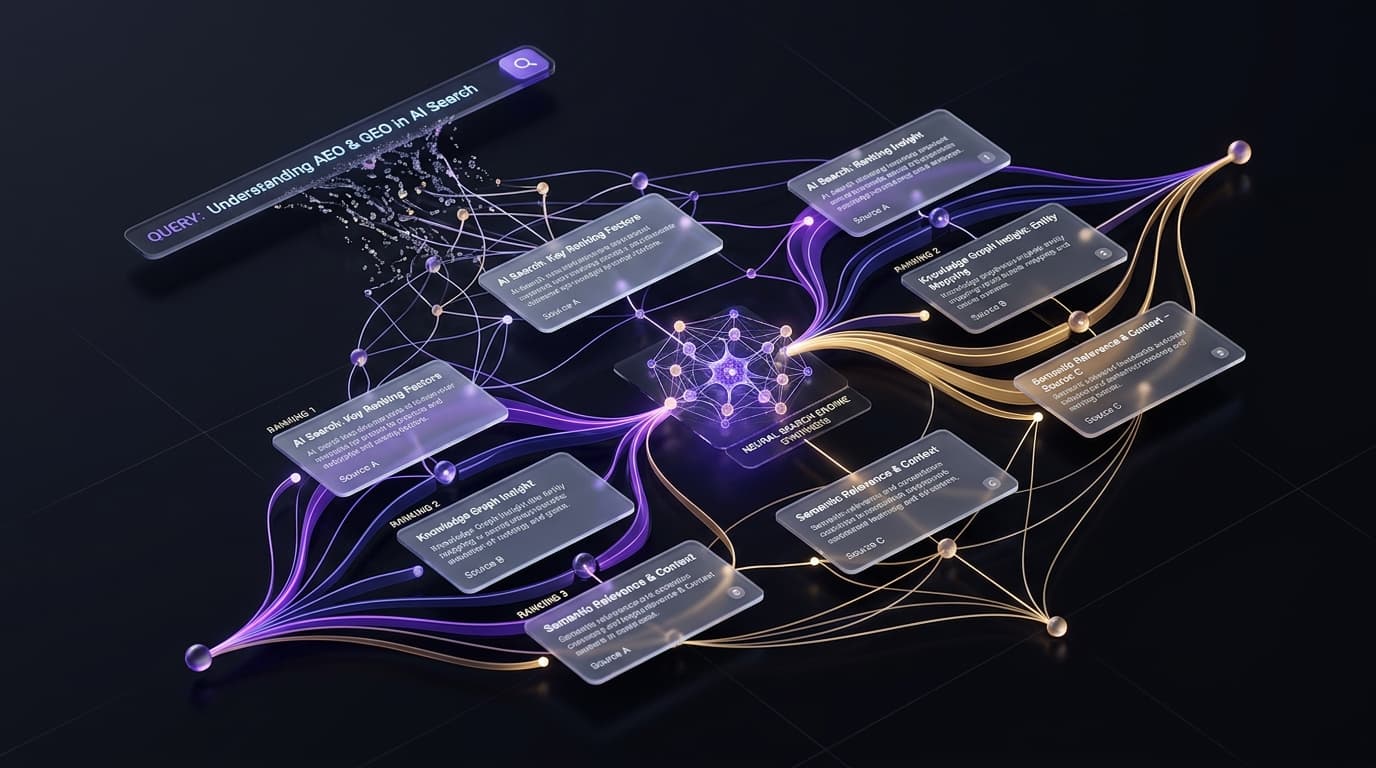
With the meteoric adoption of ChatGPT Search, Perplexity, and Google AI Overviews, users rarely scroll past the top fold to click through ten blue links. Instead, AI search engines synthesize complete answers on the spot. If your brand is not cited in that synthesized paragraph, you are invisible to over 40% of modern web traffic.
Welcome to the era of Answer Engine Optimization (AEO) and Generative Engine Optimization (GEO). Here is how modern businesses must adapt to dominate the new search reality.
The Death of 10 Blue Links: The Rise of Generative Answers
The shift from traditional search engines to conversational answer engines represents the biggest disruption to digital marketing since mobile smartphones:
- Zero-Click Searches: Over 60% of search queries now conclude without the user visiting an external link, because the AI overview directly answers their question.
- Decision Compression: Instead of comparing 5 competitor tabs, users ask: "Which software studio should I hire in India to build an AI agent web application?" and trust the top 3 brands synthesized by Perplexity.
- Citation-Driven Traffic: While total click volume has dropped, the visitors who do click citation source links convert at 3.5x higher rates because they arrive pre-educated and high-intent.
Decoding the Terminology: Traditional SEO vs AEO vs GEO
Traditional SEO (Google Search)
- Objective: Rank URLs on page 1 of search engine result pages.
- Key Metrics: Domain Authority, backlink volume, keyword density.
- Format: Long-form articles padded with repetitive keywords.
AEO & GEO (AI Search Engines)
- Objective: Be extracted, summarized, and cited within AI answers.
- Key Metrics: Information Gain score, entity co-occurrence, schema clarity.
- Format: Direct modular answers, comparative data tables, and structured takeaways.
How AI Engines Pick Sources: The 5 Citation Signals
Generative search engines utilize hybrid neural retrieval algorithms to choose which domains receive source badges. They prioritize:
- Direct Answer Proximity: Placing the core answer within the first 100 words of a header tag rather than burying it under fluff.
- Structural Extraction Ease: Clean HTML tables, bulleted specifications, and Schema.org JSON-LD that parsing agents can ingest without ambiguity.
- Digital Entity Authority: Consistent corporate entity presence across Crunchbase, GitHub, LinkedIn, industry registries, and high-reputation publications.
- Information Gain: Novel insights, original benchmarks, or proprietary survey data that cannot be found on twenty other generic blogs.
- Semantic Freshness: Content demonstrating recent updates, current year benchmarks (2026), and active technical relevance.
If your article merely summarizes what Wikipedia or generic search results already say, LLM crawlers discard your page as redundant noise.
To win prime citation spots in ChatGPT Search and Perplexity:
- Publish Real Case Studies: Include specific performance figures, architecture diagrams, and real-world project telemetry.
- Provide Direct Comparison Tables: AI models love quoting data tables directly into their response widgets.
- Answer "People Also Ask" Accurately: Include dedicated FAQ accordions paired with Schema.org
FAQPage structured data.
The Technical AEO Implementation Checklist
At Tech Solo, we build web applications and digital platforms engineered for native AI discoverability. Ensure your engineering team implements:
Step 01
Semantic Schema Markup
Equip every page with Organization, ProfessionalService, BlogPosting, and FAQPage JSON-LD structured data.
Step 02
Modular H2 & H3 Hierarchy
Structure every heading as a self-contained question answered crisply in the immediately following paragraph.
Step 03
Machine-Readable Data Tables
Present technical specifications, pricing tiers, and comparative matrices in accessible semantic HTML tables.
Step 04
Public llms.txt Manifest
Expose an LLM-friendly documentation file at /llms.txt detailing site offerings, API contracts, and key guides.
Why Your Website Needs an llms.txt File in 2026
Just as robots.txt guided web crawlers in 1996 and sitemap.xml guided Google in 2006, the open standard for 2026 is llms.txt.
An llms.txt file lives in your website's root directory. It provides markdown-formatted context, documentation links, and business summaries specifically for autonomous LLM agents. Sites with verified llms.txt manifests experience up to 4x higher citation rates in Perplexity and conversational search engines because agents can absorb their offerings without parsing complex JavaScript SPAs.
Stay Ahead with Tech Solo
Search has entered a new era. Winning online visibility in 2026 requires more than outdated keyword stuffing—it requires technical precision, clean semantic data architectures, and high-authority engineering content. Ready to scale your brand's digital presence? Partner with Tech Solo today.